The $1.2 Billion Blind Spot
How much revenue might be slipping through the cracks due to unauthorized use of your brand name?
For many iGaming operators, brand protection has evolved beyond a simple marketing consideration. It’s become a sophisticated technical challenge that requires the right infrastructure to address effectively. The operators seeing the strongest results in their markets have invested in comprehensive systems that monitor, respond to, and help prevent brand misuse across multiple channels.
In this article, we’ll walk you through the complete technology infrastructure that leading online gambling brands use to protect themselves from impersonation, trademark issues, and reputation risks. Rather than staying at the surface level, we’ll explore the specific tools, integration approaches, and automation workflows that make up a robust brand protection system—giving you a practical roadmap you can use to evaluate and strengthen your own defenses.
Understanding the Threat Landscape
The SERP Battlefield: Rogue affiliates are bidding on your exact brand terms in Google Ads, intercepting users who were already searching for you. They’re paying $0.50 per click to steal customers you would have acquired for free organically. One major European operator discovered they were losing 37% of their branded search traffic to unauthorized PPC hijackers, costing them $2.4 million annually in inflated CPCs and lost direct deposits.
Brand bidding can inflate a brand’s own Cost-Per-Click by over 50% and divert up to 40% of branded search traffic. In regulated markets like the UK, this isn’t just expensive—it’s a compliance landmine. Every misleading ad copy, every unlicensed promotion triggers potential regulatory exposure.
The Domain Minefield: Typosquatters register hundreds of variations of your domain. They’re buying spellings like “casiino.com” and “bett365.com” to capture mistyped URLs. Advanced operations use internationalized domain names (IDNs) with visually identical characters from different alphabets. To humans, “саsino.com” (with Cyrillic ‘a’) looks identical to “casino.com” but leads to a phishing site harvesting login credentials and payment data.
The brand protection tools market reached $2.93 billion in 2024 and is expected to hit $6.34 billion by 2032, growing at 9.11% CAGR. This explosive growth isn’t happening because companies love buying software. It’s happening because the threat level has become existential.
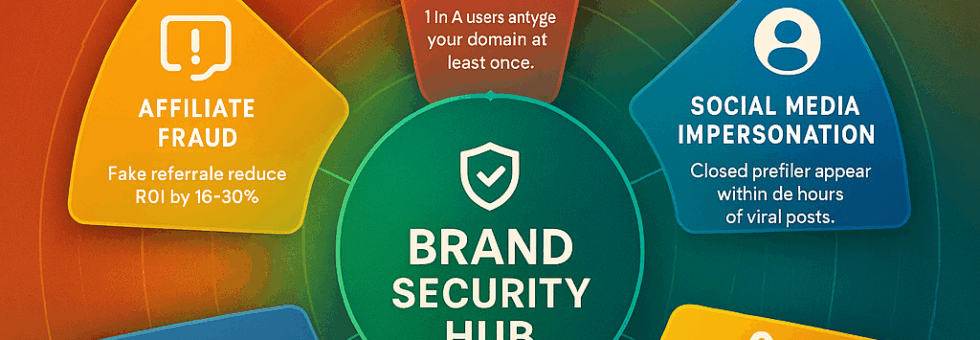
The Social Media Swarm: Instagram and Facebook accounts impersonating your brand promote fake bonuses and unauthorized offers. TikTok Shop allows sellers to reach over a billion users, making it especially tricky for brands to monitor effectively. Live shopping streams showcase counterfeit merchandise or fraudulent gambling opportunities, then disappear within hours. The transient nature of live content makes tracking nearly impossible without automated monitoring.
The Affiliate Fraud Machine:Affiliates are using cookie stuffing, brand bidding, URL hijacking, and fake traffic generation to earn commissions on players you would have acquired anyway. Some offer incentives to users to sign up, inflating referral numbers with low-quality players who never convert.
The App Store Imposters: Fake gambling apps using your branding flood the Apple App Store and Google Play. They damage your reputation when players assume they were dealing with your company.
The Dark Web Operations: Sophisticated criminal networks operate in the shadows, selling cloned versions of your platform on dark web marketplaces. These operations are invisible to standard web crawlers and require specialized monitoring tools that can navigate Tor networks and encrypted forums.
The Regulated vs. Unregulated Divide
One important consideration that’s easy to overlook: brand protection strategies aren’t one-size-fits-all.
The challenges operators face in the UK look quite different from those in unregulated Asian markets. Understanding these differences can help you build a technology stack that’s genuinely suited to your specific situation and market mix.
The Regulated Market Challenge
In jurisdictions like the UK, Malta, New Jersey, or Ontario, you’re not just fighting brand theft. You’re managing compliance risk. When a rogue affiliate runs unauthorized ads for your brand using misleading bonus claims or missing responsible gambling warnings, the Gambling Commission doesn’t fine the affiliate. They fine you.
In 2022, the UK Gambling Commission issued over £45 million in fines to operators, with a significant portion related to marketing and affiliate compliance failures. 888 Holdings was fined £9.4 million for social responsibility and AML failings, many triggered by third-party marketing violations.
Your tech stack in regulated markets needs:
- PPC Compliance Monitoring: Systems that analyze not just whether affiliates are bidding on your terms, but whether their ad copy meets regulatory standards (responsible gambling messaging, accurate bonus terms, age verification warnings)
- Affiliate Performance Surveillance: Tools that track whether players acquired through affiliate channels exhibit concerning patterns (bonus abuse, multi-accounting, suspicious deposit behaviors)
- Automated Compliance Reporting: Integration with regulatory reporting requirements, maintaining evidence chains for enforcement actions
The Unregulated Market Reality
In grey and black markets, you’re fighting pure brand theft at scale. Operators face:
- Entire cloned websites ranking in organic search for your brand terms
- Black-hat SEO operations building thousands of backlinks to fake sites
- Affiliates using aggressive tactics that would get them instantly banned in regulated markets
- Zero legal recourse for takedowns in many jurisdictions
One operator in Latin America discovered 127 active phishing sites using their exact branding, collectively capturing an estimated 30% of their branded organic traffic. These weren’t sophisticated operations—they were farming high-value players, then disappearing before legal action could be initiated.
Your tech stack in unregulated markets needs:
- Aggressive SERP Monitoring: Multiple daily snapshots from dozens of geo-locations to catch imposters quickly
- Reverse-Image Search Automation: Systems that find every instance of your logo being used without authorization
- Rapid Takedown Infrastructure: Relationships with hosting providers and domain registrars to remove sites within hours, not weeks
Pillar 1: The Monitoring Engine (The Eyes)
Rather than relying solely on customer complaints to surface brand issues, many operators have found value in proactive monitoring. Automated systems can scan millions of data points daily across multiple channels, helping teams identify potential concerns before they escalate.
SERP Monitoring at Scale
Top operators run SERP checks every 4-6 hours from 50+ geographic locations, monitoring 200-500 keyword variations. Red Points processes over 2.7 billion online data points monthly to protect 1,300+ brands globally. That’s not monthly reporting—that’s real-time continuous surveillance.
The technical challenge isn’t scraping Google. It’s doing it at scale without getting blocked while maintaining accuracy across different device types and locations. This requires infrastructure that most in-house teams can’t build or maintain.
Domain Monitoring Infrastructure
Tools like DomainCrawler provide detailed data on DNS records, WHOIS information, SSL certificates, and website technologies to aid in brand protection and cybersecurity efforts.
Advanced systems don’t just find domains that look similar. They identify domains registered by the same entities, hosted on the same infrastructure, or using the same nameservers. This pattern analysis helps you identify organized fraud networks rather than isolated incidents.
Social Media & Marketplace Surveillance
Platform Coverage Requirements:
- Facebook, Instagram, TikTok, Twitter/X
- Amazon, eBay, Alibaba, AliExpress
- App Store, Google Play
- YouTube, Twitch
- Regional platforms (WeChat, VKontakte, Line, etc.)
Leading solutions like BrandShield and MarkMonitor use AI and machine learning to:
- Scan millions of social profiles daily
- Analyze images for logo usage (even when modified or cropped)
- Detect video content featuring your branding
- Monitor marketplace listings in real-time
- Track app submissions across major stores
The most sophisticated systems use computer vision to identify your logo even when it’s been altered, watermarked, or embedded in larger images. This catches impersonators who think they’re being clever by modifying your branding slightly.
Pillar 2: The Enforcement Protocol
Of course, monitoring is only part of the equation—acting on what you find is equally important. This is where automated enforcement workflows can make a real difference, enabling teams to issue takedown notices at scale without requiring manual effort for every case.
The Enforcement Hierarchy
Not all brand abuse requires the same response. Sophisticated systems use a tiered approach:
Tier 1 – Automated Takedown (90% of cases):
- Platform reporting tools (Google DMCA, Facebook IP violations)
- Hosting provider notifications (abuse@hostingcompany.com)
- Domain registrar complaints (UDRP pre-filing)
- App store violation reporting
Response time: Minutes to hours Success rate: 65-85% for clear violations
Tier 2 – Manual Escalation (8% of cases):
- Legal demand letters
- Evidence dossier compilation
- Registrar escalation for non-responsive hosts
- Payment processor notifications (cut off revenue)
Response time: 1-3 days Success rate: 85-95% with proper documentation
Tier 3 – Legal Action (2% of cases):
- UDRP proceedings for domain disputes
- Trademark infringement litigation
- Court-ordered takedowns
- Criminal fraud referrals for persistent offenders
Response time: 30-180 days Success rate: 90%+ but expensive
The key is having systems that automatically route cases to the appropriate tier based on threat severity, jurisdiction, and likelihood of success through automated means.
The Technology Stack for Enforcement
Essential Tools:
- Automated Takedown Platforms: Services that integrate directly with major platforms’ abuse reporting APIs
- Evidence Preservation Systems: Screenshots, archive.org submissions, blockchain timestamping for legal proceedings
- Case Management Software: Track enforcement actions, response rates, and repeat offenders
- Legal Document Generation: Templates for DMCA notices, cease and desist letters, UDRP complaints
- Multi-Stakeholder Communication: Integration with legal teams, compliance officers, and executive leadership
MarkMonitor, Corsearch, and Red Points lead the enterprise-grade enforcement space. Red Points offers unlimited automated detection and takedowns with market-wide coverage, using computer vision and AI-driven detection systems.
Network Analysis & Systemic Takedowns
Advanced operators use graph database technology to map relationships between:
- Domain registrations (same WHOIS data)
- Hosting infrastructure (same IP addresses)
- Payment processors (same merchant accounts)
- Traffic patterns (same referral sources)
When you identify one phishing site, network analysis might reveal 47 others operated by the same group. A coordinated enforcement action targeting the shared infrastructure (hosting provider, payment processor, traffic sources) can neutralize the entire operation rather than playing whack-a-mole with individual domains.
Enforcement Response Matrix
| Threat Type | Detection Speed | Enforcement Tier | Avg. Removal Time | Success Rate | Cost per Case |
|---|---|---|---|---|---|
| PPC Brand Bidding | 4-6 hours | Tier 1 (Automated) | 2-4 days | 78% | $15-30 |
| Typosquatted Domain | 24-48 hours | Tier 2 (Manual) | 7-14 days | 85% | $200-500 |
| Social Media Clone | 6-12 hours | Tier 1 (Automated) | 1-3 days | 82% | $10-20 |
| Marketplace Counterfeit | 8-16 hours | Tier 1 (Automated) | 2-5 days | 75% | $20-40 |
| Phishing Website | 12-24 hours | Tier 2 (Manual) | 5-10 days | 88% | $150-400 |
| Mobile App Clone | 3-7 days | Tier 2 (Manual) | 14-30 days | 70% | $300-800 |
| Dark Web Listing | 1-4 weeks | Tier 3 (Legal) | 60-120 days | 45% | $2,000-10,000 |
Pillar 3: The Prevention Layer
Defensive Domain Registration
Market leaders don’t just own their primary domain. They own:
- All major TLD variations (.com, .net, .org, .co, .io, .gg, .casino, .bet)
- Common misspellings and typo variations (20-50 domains)
- Competitor-adjacent domains (if legally permissible)
- Regional ccTLDs for target markets (.uk, .eu, .ca, .in, .br)
This isn’t about using these domains. It’s about preventing bad actors from using them. Total investment: $2,000-10,000 annually. Total value: preventing millions in fraud losses.
Advanced operators use automated domain suggestion tools that generate likely typosquatting variations based on linguistic analysis, then preemptively register the highest-risk options.
Trademark Portfolio Management
Strategic Trademark Coverage:
- Core brand name (Class 41: Entertainment services)
- Logo and design marks
- Taglines and slogans
- Product names and sub-brands
- Character names (if applicable)
- Geographic variations for international expansion
Trademark monitoring services like Corsearch track global trademark filings to identify potentially infringing registrations. This provides early warning when someone attempts to register a mark that’s confusingly similar to yours.
SERP Domination Strategy
The best defense is offense. If your brand controls positions 1-5 in organic search results, there’s less room for imposters.
Owned Properties to Develop:
- Main brand site (position 1)
- Mobile app landing page (position 2)
- Help/support subdomain (position 3)
- Blog/news section (position 4)
- Regional landing pages (positions 5-7)
- Official social media profiles (positions 8-10)
This strategy makes it algorithmically harder for phishing sites to rank for your brand terms. Google’s algorithms favor brand-owned properties for brand-name searches. By developing a comprehensive ecosystem of owned properties, you crowd out potential impersonators.
Payment Processor & Traffic Source Relationships
Establish direct relationships with major payment processors and traffic sources:
- Notify processors of your legitimate merchant accounts
- Register official domains with ad networks
- Set up direct communication channels for fraud reporting
- Create whitelist systems for authorized affiliates
When a processor or traffic source receives a complaint about a site using your branding, having these relationships established dramatically speeds removal.
Key Takeaways
If you take nothing else from this article, remember:
- Brand Protection Requires Infrastructure, Not Just Software: You can’t solve this with a single tool subscription. Market leaders build integrated systems combining monitoring, enforcement, and prevention capabilities across all relevant platforms and geolocations.
- Regulated and Unregulated Markets Demand Different Tech Stacks: Your approach in the UK should look fundamentally different from your approach in unregulated Asian markets. One prioritizes compliance monitoring; the other requires aggressive takedown capabilities and rapid response times.
- Automation Is Non-Negotiable at Scale: When you’re monitoring 347 keyword variations across 50 locations every 4-6 hours, manual processes aren’t just inefficient—they’re impossible. Automated detection, threat scoring, and initial enforcement actions must happen without human intervention.
- Network Analysis Beats Whack-a-Mole: Sophisticated operators don’t just remove individual phishing sites. They map fraud networks and execute coordinated enforcement actions that dismantle entire criminal operations. This requires graph database technology and pattern recognition systems.
- Prevention Is More Valuable Than Enforcement: Defensive domain registration costs $2,000-10,000 annually. A single successful phishing operation can cost you $50,000-200,000 per month in lost revenue and inflated acquisition costs. The ROI on prevention is immediate and massive.
- The Investment Horizon Is 18-24 Months: Building a market-leading brand protection infrastructure isn’t a quick implementation. It requires systematic deployment of monitoring tools, development of automated workflows, integration with existing systems, and continuous refinement based on threat evolution.
- The Cost of Inaction Is Measurable: iGaming fraud losses totaled $1.2 billion between 2022-2023. Operators without sophisticated brand protection lose an estimated 20-35% of their branded search traffic to impersonation and hijacking. For a mid-sized operator ($50M annual revenue), this represents $10-17.5 million in annual losses.
At Leverage, we’ve built brand protection systems for operators. We’ve seen what works, what fails, and what’s worth the investment.
Schedule a call to discuss your current exposure, identify your highest-risk gaps, and design a phased implementation roadmap that matches your technical infrastructure and regulatory environment. Contact us today